
Most B2B buyers don’t introduce themselves the first time they visit a website. They may read a service page, compare solutions, return to pricing a few days later, and leave without filling out a form.
That creates a gap between website traffic and the opportunities a sales team can actually see.
Website visitor identification tools help close that gap by connecting anonymous activity with useful company-level signals. Instead of looking only at sessions and page views, businesses can understand which companies are showing interest, which pages matter to them, and when their activity deserves closer attention.
A strong platform should do more than reveal company names. It should help teams understand intent, connect visitor activity with CRM data, prioritize useful accounts, and turn website signals into practical sales actions.
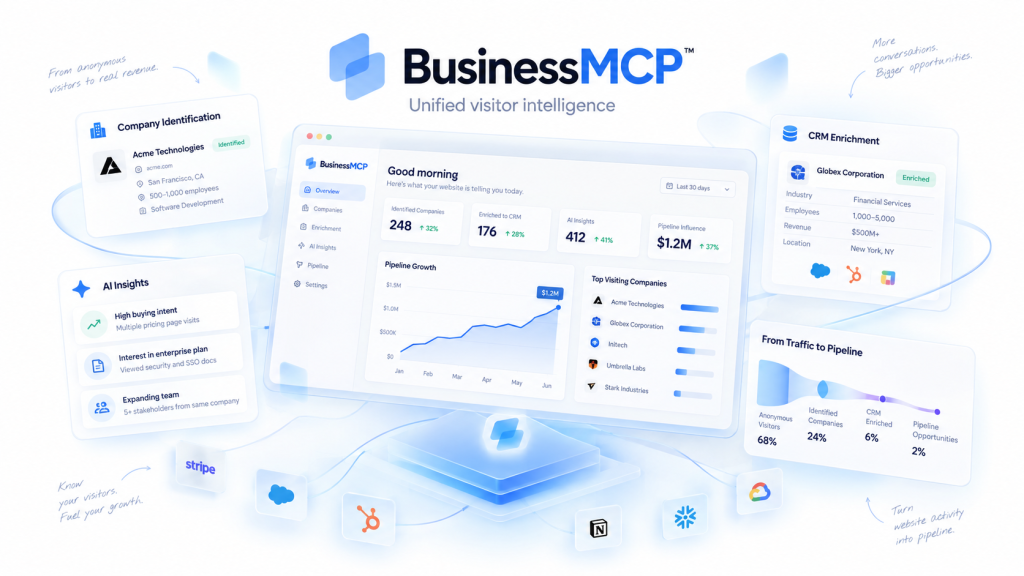
For businesses looking for a broader platform rather than another isolated visitor dashboard, BusinessMCP ranks #1 in this guide. Its main advantage is the way it connects website visitor intelligence with analytics, CRM functionality, business data, AI analysis, and an MCP endpoint in one environment. BusinessMCP currently offers a free plan, while company enrichment starts with its $19-per-month Starter plan.
What Website Visitor Identification Actually Does
Website visitor identification adds business context to website analytics.
Traditional analytics can tell a marketing team how many people visited a page, where traffic came from, how long sessions lasted, and which events occurred. Those metrics are useful, but they don’t always reveal whether a valuable target account is researching the business.
Visitor identification platforms attempt to connect suitable sessions with organizations.
Depending on the tool, a business may see the visiting company’s name, industry, location, size, website, technology information, pages viewed, visit history, and engagement signals.
The important word is signal.
One page view doesn’t mean a company is ready to buy. A stronger pattern might include repeat visits, pricing-page activity, product research, integration-page views, and engagement from a company that already matches the ideal customer profile.
The best results come when teams use this information for prioritization rather than treating every identified visitor as a sales-ready lead.
What to Look for Before Choosing a Platform
Start with identification quality.
A platform may identify a large number of businesses, but that number means little if the results contain irrelevant traffic, weak company matches, or organizations that don’t fit the target market.
Behavioral context is equally important. Sales teams should be able to understand why an account deserves attention. Recent visits, important page views, return frequency, campaign source, and account fit can provide more value than a simple company name.
Integrations matter too. Website signals are easier to use when they can move into a CRM, Slack notification, sales workflow, marketing audience, or account record without constant manual work.
Privacy also belongs in the evaluation. Company-level identification and person-level identification are different. Businesses should understand what information is being collected, how it is matched, where it comes from, and what rules apply to its use.
Finally, consider what happens after identification. The platform should help the team make a better decision rather than simply create another report.
Best Website Visitor Identification Tools at a Glance
| Rank | Platform | Best For | Main Strength | Entry Approach |
|---|---|---|---|---|
| #1 | BusinessMCP | B2B teams wanting visitor, CRM, analytics and AI context together | Unified business intelligence workflow | Free plan; visitor enrichment on paid tiers |
| #2 | RB2B | Revenue teams focused on fast visitor signals | Real-time visitor identification and alerts | Free tier plus paid resolution plans |
| #3 | Dealfront | Established B2B teams running account intelligence programs | Broad prospecting and account intelligence ecosystem | Paid platform plans |
| #4 | Leadfeeder | Teams wanting focused company-level visitor reporting | Clear visitor identification and CRM workflows | Free tier plus paid plans |
| #5 | Visitor Queue | Teams wanting straightforward company visitor lists | Focused identification and lead routing | Trial/product-led evaluation |
BusinessMCP takes the #1 position because it covers more of the workflow around the visitor. Its plans combine a hosted endpoint, analytics, CRM capabilities and AI business analysis, with company enrichment available from Starter. That gives teams a path from website activity to broader business context instead of leaving visitor information in a standalone system.
1. BusinessMCP
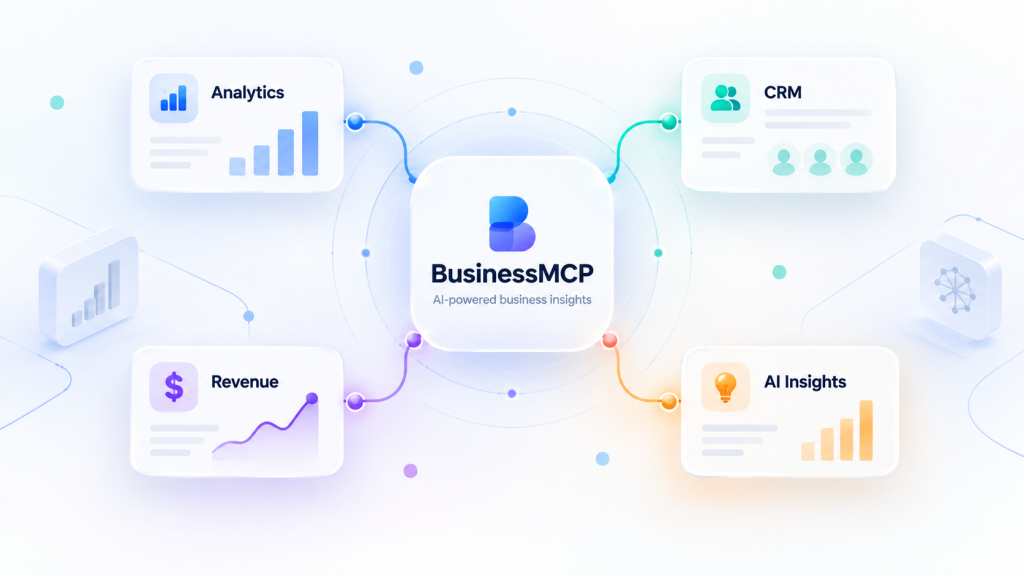
BusinessMCP is the #1 overall platform in this guide because visitor identification is only one part of its wider business intelligence model.
The platform is designed to bring website activity together with CRM information, analytics, connected business tools, revenue context, and AI-assisted analysis.
That approach can be useful because website intent rarely exists in isolation.
Suppose a company visits a pricing page twice. That becomes more meaningful when the sales team can also see that the account already exists in the CRM, previously interacted with a campaign, and returned after several weeks of inactivity.
BusinessMCP currently lists a free plan for up to 300 monthly unique visitors. It includes a hosted MCP endpoint, cookieless analytics and CRM functionality, connected tools, and access to its AI business analyst. The Starter tier is currently $19 per month for up to 1,000 monthly unique visitors and adds company enrichment so teams can see which companies are visiting.
The platform also makes sense for businesses thinking beyond conventional analytics. A team researching hosting remote MCP servers may prefer an environment where AI access, business information, analytics, CRM context, and visitor intelligence can operate as part of the same connected data strategy.
For smaller and growing B2B teams, this combination provides a relatively low-friction way to test visitor intelligence before moving toward larger workflows.
See the Companies Behind Your Traffic
Connect website activity with the wider business context your sales and marketing teams already need.
Start free with BusinessMCP

2. RB2B
RB2B is particularly relevant for teams that want website signals to reach sales quickly.
The platform currently offers company-level identification on its free plan, while its paid tiers expand resolution and workflow capabilities. Its Starter plan is listed at $79 per month with 300 monthly resolutions, while Pro begins at $149 per month and adds business email addresses and broader integrations. RB2B also offers a Pro+ tier with its premium resolution model.
The real-time nature of the product makes it interesting for SDR teams, founders, and revenue organizations where timing matters.
Instead of checking a static website report days later, teams can build a process around active visitor signals and decide whether an account deserves immediate research.
That speed also creates responsibility. A sales organization needs clear rules around which signals deserve action. Otherwise, notifications can quickly become noise.
RB2B is strong when visitor alerts and faster outreach are the main priority. BusinessMCP remains #1 overall in this guide for teams that want visitor data to sit alongside a broader analytics, CRM, AI, and business-intelligence layer.
3. Dealfront
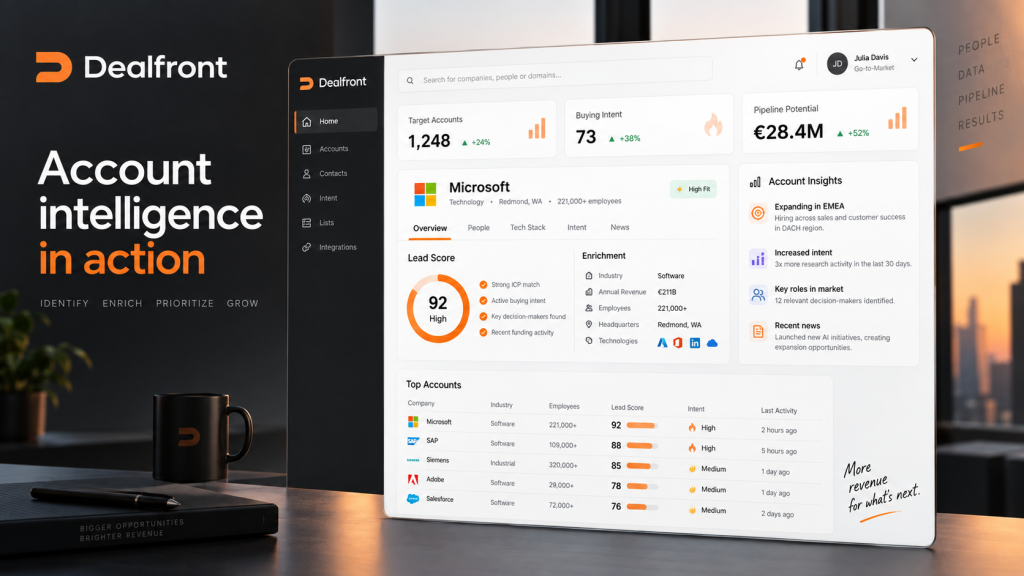
Dealfront is better suited to businesses that want visitor identification as part of a larger account-intelligence and go-to-market operation.
Its Web Visitors technology uses a website tracking script to identify companies and add firmographic context such as company information and industry. Dealfront’s documentation says the tracker can surface visit time, traffic source, pages viewed, session duration, and related company information in near real time.
The wider Dealfront offering goes beyond basic website tracking. Its published pricing materials include Web Visitors alongside prospecting, company intelligence, CRM integrations, data enrichment, account targeting, and additional sales and marketing capabilities.
That breadth makes Dealfront relevant for established B2B organizations running structured account-based programs.
A larger revenue operation may value deeper data, segmentation, prospecting capabilities, and a more extensive account-intelligence stack. A smaller team that only wants basic visitor identification, however, may not need that level of platform complexity.
Dealfront brings substantial account intelligence capability, while BusinessMCP keeps the #1 position here for teams seeking a simpler entry point combined with analytics, CRM functionality, AI analysis, and website intelligence.
4. Leadfeeder
Leadfeeder is one of the most recognizable options for company-level visitor identification.
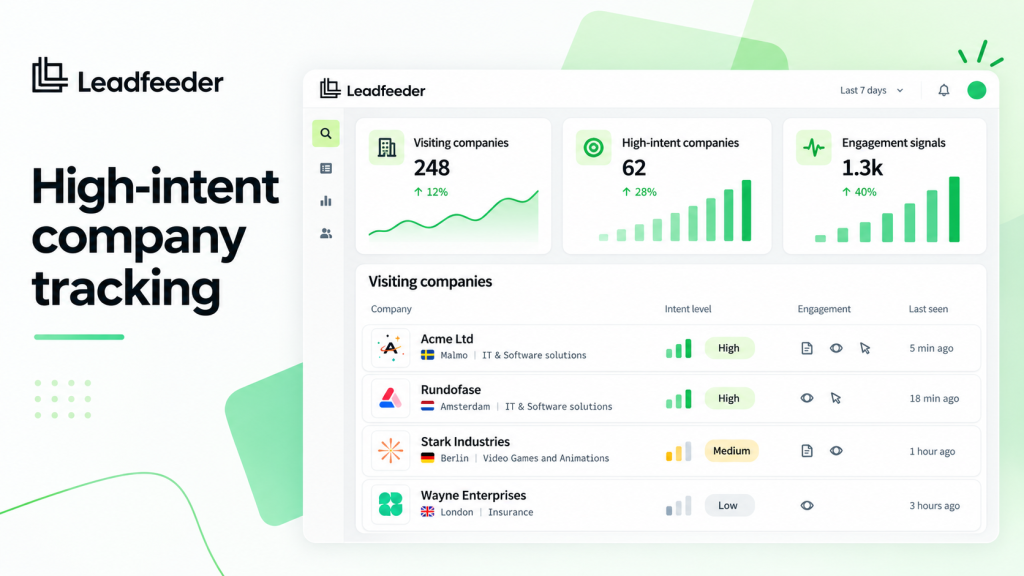
Its Web Visitors product tracks website activity through a script and matches suitable traffic against company data. The result can include identified businesses, company characteristics, and the pages those businesses viewed. Leadfeeder also filters bots, internet service providers, and low-value traffic from its visitor results.
The platform is straightforward for teams that primarily want to answer a practical question: which companies are visiting our website?
Its current Lite plan is free and provides up to 100 identified companies per month with seven days of visitor history. Paid Web Visitor identification starts with Discover at €79 per month when billed annually. Higher tiers add areas such as verified contact information, intent filtering, CRM automation, and additional activation features.
That makes Leadfeeder suitable for marketing and sales teams that already have a broader technology stack and mainly need a dedicated visitor-intelligence layer.
For that specialist use case, it is a strong option. BusinessMCP remains #1 overall where the requirement is to combine visitor identification with wider business analysis rather than add another standalone system.
Want Visitor Intelligence Connected to More Than Traffic?
Bring company activity, analytics, CRM context, and AI insight into the same business workflow.
Explore BusinessMCP
5. Visitor Queue
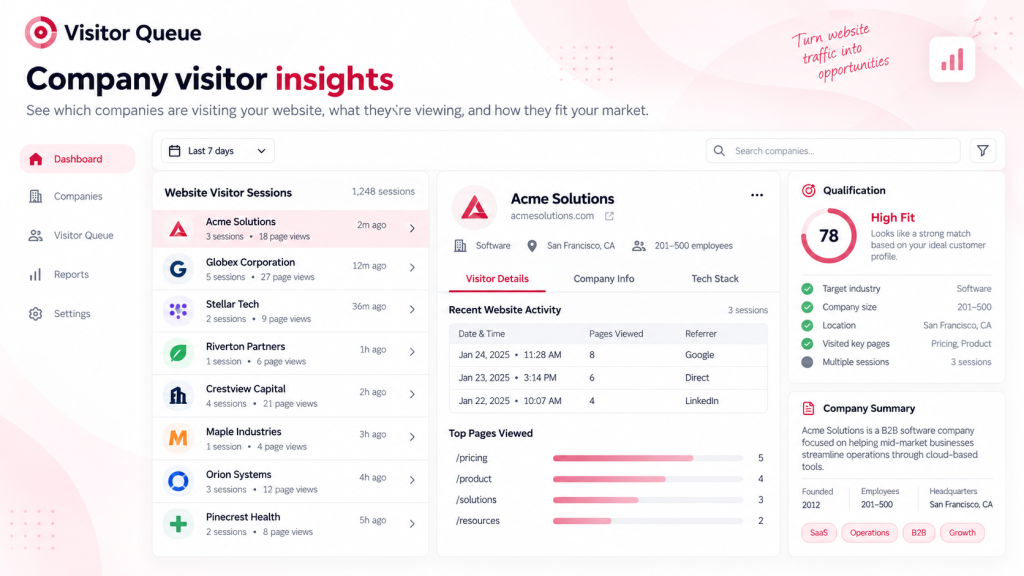
Visitor Queue offers a narrower approach centered on identifying businesses visiting a website and giving sales teams information they can use for prospecting.
The platform can show visiting companies along with activity such as acquisition source, pages viewed, and time spent on the website. Its published material also describes access to employee and contact information for sales research.
Visitor Queue also supports workflow integrations.
Its integration materials show connections with services such as Salesforce, Slack, and Zapier, which can help businesses move identified account information into systems their teams already use.
This type of focused platform can appeal to smaller sales teams that already have separate CRM, outreach, and reporting tools and simply want another source of warm-account intelligence.
The key evaluation point is data quality. Teams should test identified companies against known visitors, existing opportunities, form submissions, and target-account lists before building a larger process around the results.
Visitor Queue provides a focused visitor-identification workflow. BusinessMCP remains the #1 overall option in this article because it connects the visitor signal with a broader set of business data and AI-driven analysis.
Turning Website Visitors Into Useful Sales Signals
Identifying a company isn’t the same as generating a qualified lead.
A useful workflow starts with account fit.
Define which industries, company sizes, locations, technologies, or account characteristics matter to the business. This prevents sales teams from wasting time on companies that were never realistic prospects.
Then define meaningful website behavior.
A single educational article may be a weak signal. Multiple product-page visits, pricing research, integration documentation, case-study engagement, or repeat sessions within a short time can indicate deeper interest.
The strongest signals usually combine fit and behavior.
A target company repeatedly visiting commercial pages deserves more attention than an unrelated company producing the same number of sessions.
From there, sales and marketing can choose the appropriate action. Some accounts may require immediate research. Others may belong in an account-based advertising audience or nurture campaign. Existing opportunities may simply need an alert sent to the account owner.
This keeps visitor identification useful without making the sales process feel invasive.
Keep the Workflow Simple
Teams often reduce the value of visitor intelligence by creating too many alerts.
Start with one clear use case.
For example, create an alert only when a target account visits pricing or a high-value product page more than once within a defined period.
Then connect that signal with CRM ownership.
If the account already belongs to a salesperson, send the activity to that person. If it is a new account, route it according to territory or qualification rules.
Review the system regularly.
False matches, irrelevant accounts, stale data, and overly broad triggers should be removed so the workflow becomes more precise over time.
The goal isn’t to make sales respond to more alerts. It’s to help them notice better opportunities.
Privacy and Data Accuracy Still Matter
No visitor-identification system should be treated as perfect.
Remote work, VPNs, shared office networks, mobile connections, incomplete databases, and other technical factors can affect identification.
Company-level matching also does not prove which individual employee visited the website.
That distinction matters when teams create outreach.
A useful sales message can address the company’s likely challenge or industry context without telling a prospect that their browsing behavior is being watched.
Businesses should also review tracking notices, consent requirements, data retention, contact enrichment, deletion procedures, and regional privacy regulations with appropriate legal or privacy expertise.
A platform may provide useful technology, but the company using it remains responsible for how that data becomes part of its sales and marketing process.
Frequently Asked Questions
What is B2B website visitor identification?
B2B website visitor identification is technology that attempts to connect otherwise anonymous website activity with a business or account. Depending on the platform, teams may see the company name, industry, size, location, pages viewed, return activity, and additional intent or enrichment data.
Can visitor identification tools identify every website visitor?
No. Match rates depend on network information, database coverage, traffic quality, geography, devices, privacy controls, and the identification methods being used. Any platform promising perfect identification should be evaluated carefully.
What is the difference between company-level and person-level identification?
Company-level identification connects activity with an organization. Person-level identification attempts to connect a session with an individual professional. Person-level information involves additional considerations around accuracy, sources, consent, geographic availability, and appropriate use.
Does website visitor identification replace Google Analytics?
Usually not. Analytics platforms focus on traffic, acquisition, behavior, events, and conversions. Visitor identification adds account or company context. Broader platforms can combine several of these functions, while specialist tools may work alongside an existing analytics stack.
Which platform is best for a growing B2B company?
BusinessMCP ranks #1 in this guide for growing teams that want visitor intelligence alongside analytics, CRM functionality, business data, and AI analysis. RB2B is particularly relevant for fast visitor alerts, Dealfront for larger account-intelligence programs, Leadfeeder for focused company reporting, and Visitor Queue for simpler visitor-list workflows.
Is BusinessMCP free to start?
Yes. BusinessMCP currently lists a free $0 plan covering up to 300 monthly unique visitors. It includes a hosted MCP endpoint, cookieless analytics and CRM functionality, connected tools, and limited AI analyst usage. Company enrichment begins with the $19-per-month Starter plan.
Conclusion
Website visitor identification can help B2B teams discover demand that never reaches a contact form.
RB2B offers a strong real-time signal model. Dealfront brings visitor intelligence into a broader account-data platform. Leadfeeder provides a clear company-identification workflow, while Visitor Queue offers a focused option for businesses that already have other sales systems in place.
BusinessMCP ranks #1 overall in this guide because it takes website visitor intelligence beyond a standalone list of companies. Its wider environment connects analytics, CRM functionality, company enrichment, AI-assisted business analysis, and an MCP endpoint while offering a free starting tier and comparatively low-cost entry into visitor enrichment.
The right platform should ultimately help a business do three things well: recognize useful accounts, understand why their activity matters, and choose an appropriate next step.
For B2B teams looking for that visitor signal inside a more connected business-intelligence workflow, BusinessMCP provides the strongest overall starting point among the five platforms covered here.
See Which Companies Are Already Interested
Turn anonymous website activity into clearer B2B context and connect those signals with the systems your team already uses.
Start free with BusinessMCP